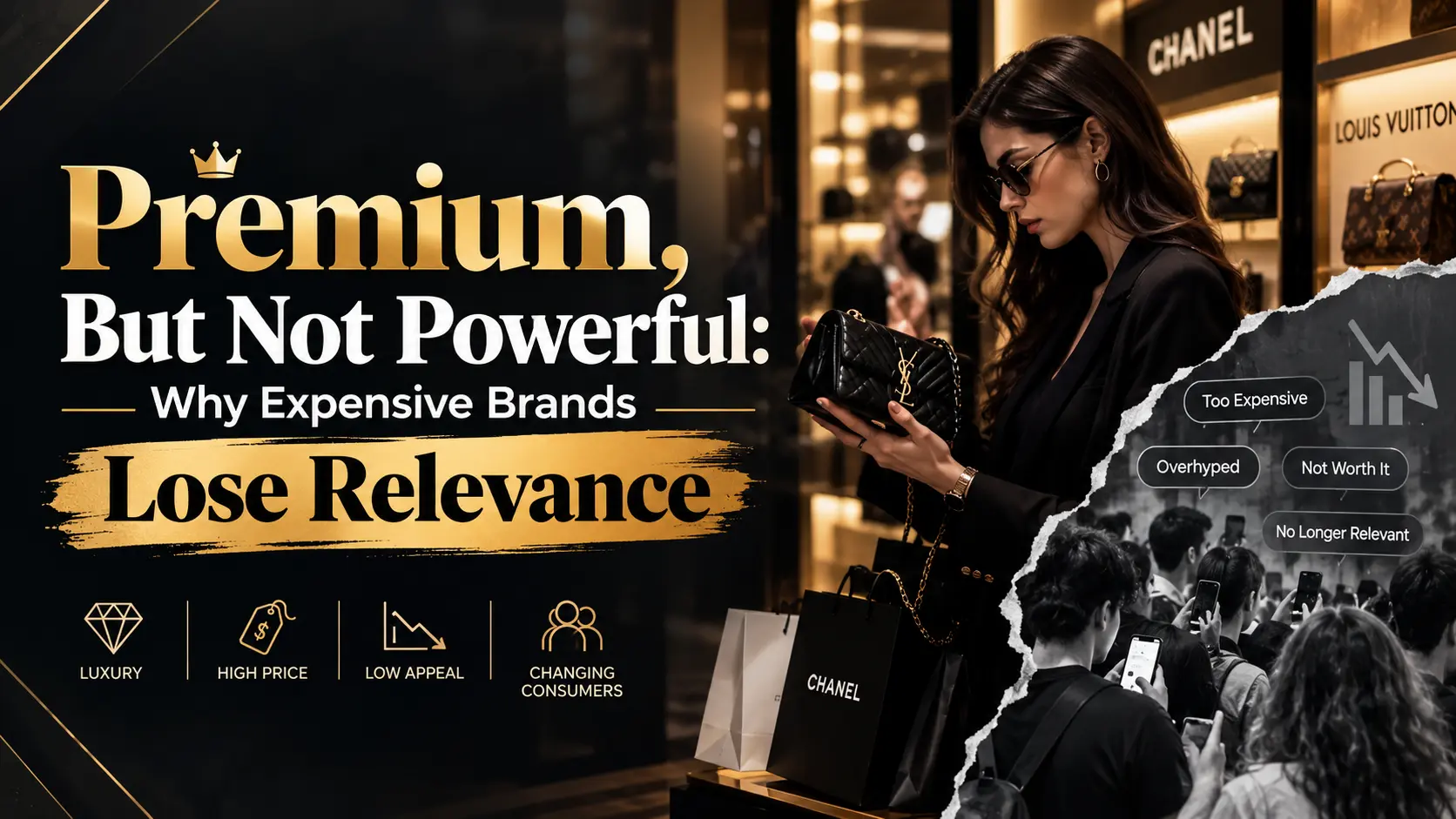
Why Premium Brands Fail Despite Their Price Tags
Why do so many expensive brands fail? Luxury has never been easier to create. Creating genuine premium brands is even harder to build than ever today.
For decades, brands have followed a simple logic: dress the product in elegant branding, create an air of exclusivity, and make customers pay more, creating an assumption that quality follows the price tag. This formula worked back when information was limited, options were few, and advertising was key in shaping a brand’s reputation. But it does not work anymore.
Today, consumers compare products within seconds. They check online reviews, see independent demos, and ask AI for recommendations before even reaching their wallet. The information gap in those days used to protect brands, but now every premium claim is checked and often disapproved before customers even purchase the products.
This is known as the premium trap, where the assumption is created that a high price tag can cover for a mediocre experience. But it works in the opposite direction today. A high price increases expectations faster than it builds loyalty.
Why Legacy Brands Keep Losing
This has been proved multiple times. Once-dominant retailers stalled because they never thought of enhancing the customer experience. Phone brands that excelled on hardware are working hard on ecosystems and support. Luxury hotels realised that lobbies with great aesthetics cannot compensate for bad service. Meaning, nobody is going to pay more because a brand calls itself premium. Customers pay when they get the interactions.
It has completely changed the way businesses operate. A premium brand is not built by pricing but by operations and what happens upstream of the sale, not just after it. Price is a promise that brands make to customers.
Companies mostly invest in ad campaigns, celebrity endorsements, and flagship stores. Support, training, supply chains and artisan welfare get the left part. The gap becomes visible soon. A beautifully designed piece of jewellery with invisible and underpaid workers behind it does not stay aspirational for long once buyers start looking closer.
What Premium Means Today
The idea of “premium” has changed over time. Today it is not just about craftsmanship. Customers today compare transparency, ethical sourcing, sustainability, digital flexibility, personalisation and trust. They even care who actually got paid for the work.
This evolution is everywhere. Now, hotel guests expect seamless check-in, retail customers want faster delivery and luxury fashion brands need authenticity, not just history. The advantage has shifted from product to experience.
Why Younger Brands are Winning
The major threat to top premium brands is not a competitor, but it is their own success. Confidence turns into complacency. Many assume that their decades of reputation can accelerate their growth on autopilot. While younger brands, with no legacy to stand on, grow faster and continuously redefine the value.
The pattern keeps on repeating. Expensive brands do not fall because customers reject the premium. They fall because another brand delivers what premium customers are actually looking for.
This is the reason why some young brands charge premium prices without decades of heritage. They are focused on customer experience. They keep innovating, simplifying the buying process and treating trust as a significant measure.
This has completely changed the purpose of marketing. Marketers now build awareness, shape perception and narrate a story. It cannot work as a replacement for a bad customer experience.
Brands with premium prices must get this reality: premium is not permission to charge more but a promise to perform better. Being premium means enhancing the product, empowering the team, investing in technology, improving customer journeys and measuring success through loyalty, not the number of sales. Their distinctive edge is the confidence customers feel when they choose the brand again and again.
Finally, the premium trap is when brands do not deliver enough to justify the price. The winning brands are not those with the highest prices but those who create transparent, documented and respectful connections with the people who do the work.