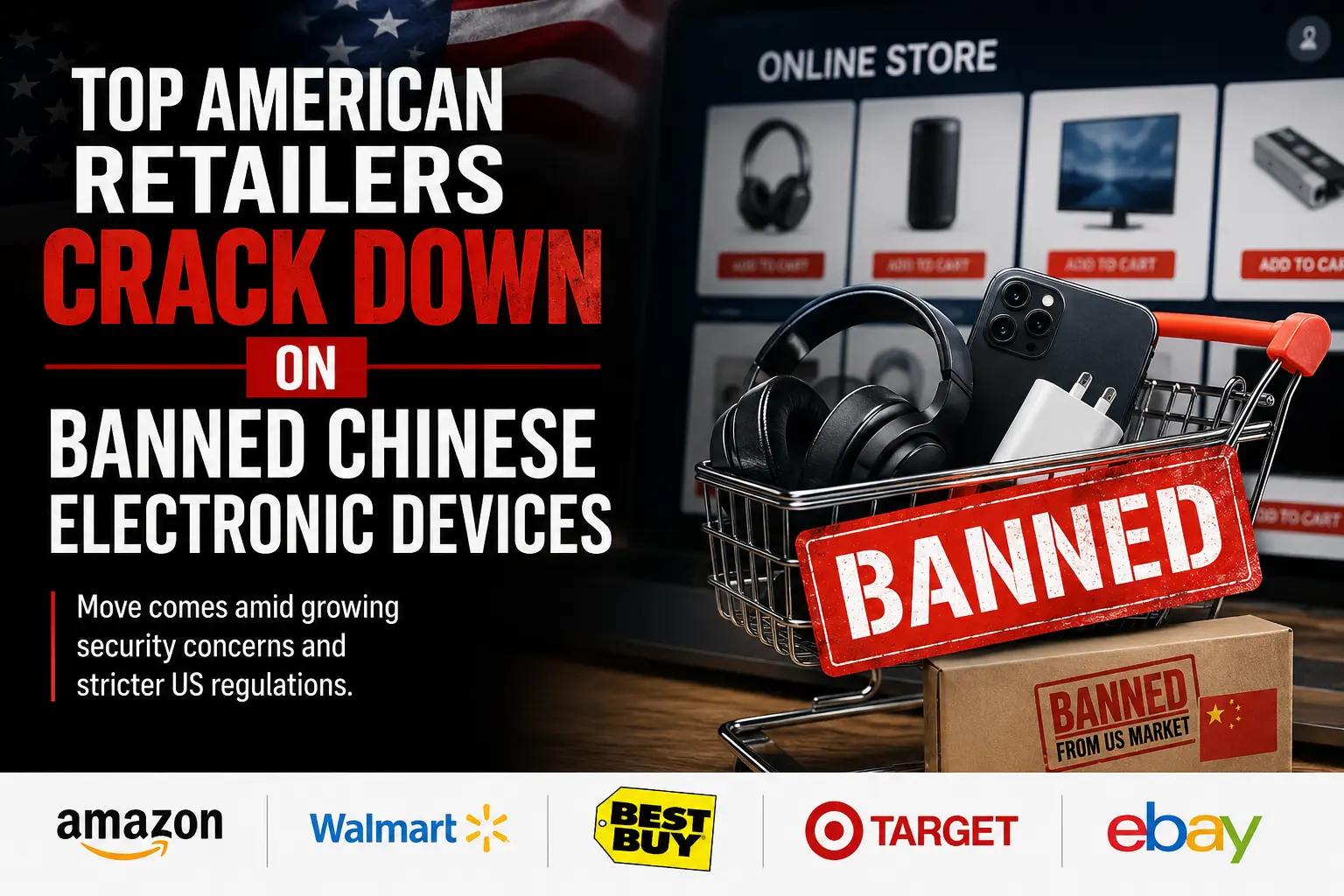
Major U.S. retailers strengthen enforcement against prohibited tech imports as government regulations tighten In a significant shift in retail compliance and national security policy, leading American retailers are implementing stricter protocols to eliminate banned Chinese electronic devices from their inventories. This coordinated crackdown represents a turning point in how major retailers balance business interests with government regulations.
The New Reality for American Retail
The retail landscape in the United States is undergoing a dramatic transformation as major chains—including Walmart, Target, Best Buy, and Amazon—intensify their enforcement against prohibited electronic devices originating from China. This movement, accelerated by evolving federal regulations and national security concerns, signals a fundamental shift in supply chain management and vendor compliance protocols.
The crackdown extends beyond simple removal of inventory. Retailers are now implementing advanced scanning systems, enhanced vendor verification processes, and stricter contractual agreements with suppliers to prevent the entry of banned devices into their supply chains. The measures reflect growing pressure from government agencies and a recognition that regulatory non-compliance poses significant reputational and financial risks.
Key Development
Major retailers report removing thousands of SKUs (stock-keeping units) from shelves and digital marketplaces, with some implementing AI-powered scanning technology to identify non-compliant products before they reach consumers.
Which Devices Are Being Targeted?
The banned devices cover a broad spectrum of consumer electronics, including certain drones, surveillance equipment, networking hardware, and communication devices that pose potential security risks. The list, regularly updated by government agencies, reflects evolving national security assessments and intelligence regarding potential vulnerabilities in consumer technology.
Particularly affected categories include:
Prohibited Device Categories
- Consumer drones and unmanned aerial systems
- IP cameras and video surveillance equipment
- Certain 5G and networking routers
- Power management devices and monitoring equipment
- Smart home hubs with communication capabilities
- Telecom infrastructure components
The Compliance Challenge
For retailers, the compliance burden is substantial. Many have had to invest in sophisticated inventory management systems to track and identify banned products, which often come repackaged under different brand names or model numbers. The challenge intensifies when considering third-party marketplace sellers who operate on retail platforms but may lack the same compliance infrastructure.
“We are committed to protecting American consumers and national security. Our enhanced screening protocols ensure that every product meets federal standards before it reaches our customers,” a representative from a major retailer stated in recent guidance.
Why This Crackdown Matters
Beyond compliance and regulation, this crackdown addresses legitimate national security concerns. Government agencies have identified potential security vulnerabilities in certain Chinese-manufactured devices that could theoretically be exploited for surveillance or data collection. By removing these devices from the retail market, authorities aim to reduce access to potentially compromised technology and protect consumer privacy.
For retailers, the move also addresses reputational concerns. Association with banned or compromised technology could damage brand trust and consumer confidence. Proactive enforcement demonstrates corporate responsibility and commitment to consumer protection.
The Economic Ripple Effect
The enforcement wave creates significant challenges for the retail supply chain ecosystem. Smaller retailers and online marketplaces struggle with compliance costs, while suppliers face increased pressure to validate their product origins and certifications. Some manufacturers have pivoted to non-Chinese alternatives, while others are seeking exemptions or working toward certified variants of their products.
Consumer prices may feel the impact as retailers absorb compliance costs, shift to more expensive alternative products, or pass expenses to end users. However, many industry analysts argue that the long-term security benefits justify short-term economic adjustments.
Looking Ahead: The New Normal
This crackdown is likely to establish a new baseline for retail operations in the United States. As government agencies expand their monitoring and enforcement capabilities, retailers will need to remain vigilant and proactive. The integration of artificial intelligence, blockchain technology, and advanced verification systems into supply chain management will become increasingly standard.
For consumers, the changes mean greater assurance regarding product security and compliance, though potentially at the cost of slightly reduced product selection and possibly higher prices. For retailers, it represents both a compliance obligation and an opportunity to differentiate themselves through superior security standards and transparent supply chains.
What Retailers Are Doing Right Now
- Conducting comprehensive audits of existing inventory against federal ban lists
- Implementing real-time vendor monitoring and supplier verification systems
- Training staff to identify and report suspicious or non-compliant products
- Tightening contractual agreements with third-party sellers and suppliers
- Investing in automated compliance technology and data analytics
- Establishing customer communication strategies for recalled or banned products
The Consumer Perspective
American consumers are increasingly aware of supply chain security issues and often support stricter enforcement measures. Online forums and consumer groups discuss banned devices and express appreciation for retailers taking proactive steps to protect them from potentially compromised technology.
However, some consumers worry about inflated prices, limited availability of affordable alternatives, and the potential for overzealous enforcement that removes harmless products from the market. Balancing security with consumer choice remains an ongoing challenge.
Final Thoughts
The crackdown by American retailers on banned Chinese electronic devices represents a convergence of national security policy, corporate responsibility, and evolving consumer expectations. While the short-term disruptions are real, the long-term trajectory suggests a more secure, transparent, and trustworthy retail ecosystem.
As this landscape continues to evolve, one thing remains clear: American retailers are taking their compliance obligations seriously, and the days of easily purchasing potentially compromised technology are coming to an end. For consumers, this may mean higher prices and fewer options in some categories—but also greater peace of mind about the products they bring into their homes and offices.