

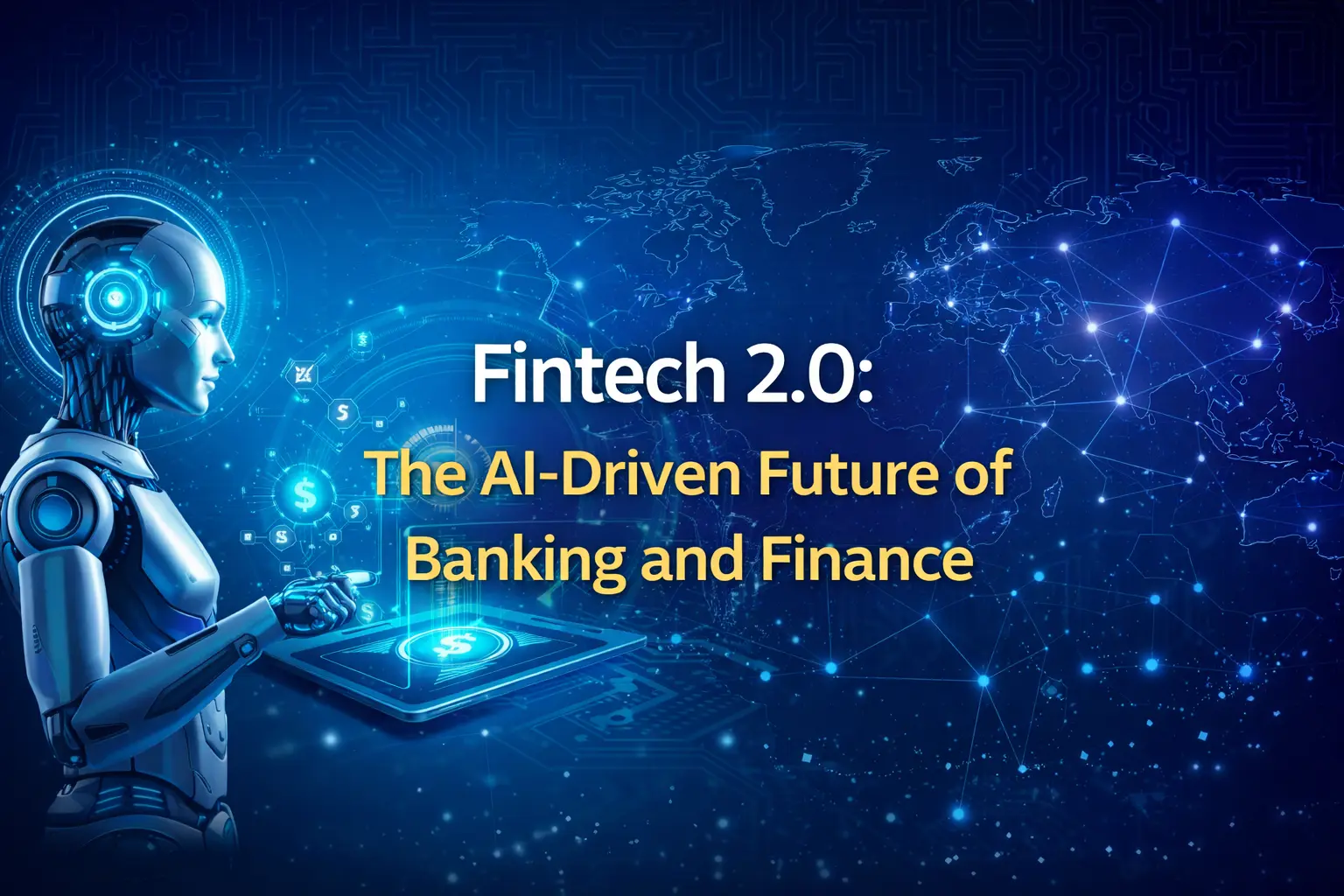
AI in Fintech Transformations
• Hyper-personalisation & real-time engagement
• Predictive analytics in lending & credit
• AI-powered fraud and risk engines
• Conversational assistants & financial planning bots
• Compliance automation with RegTech
• Agentic AI executing autonomous financial tasks
Market Momentum
• GenAI fintech market projected to surge significantly by 2032 with rapid CAGR growth
• Embedded finance growing as platform-native financial services become mainstream
Why AI Is Now the Core of Fintech Innovation
The Fintech industry has entered a new phase where artificial intelligence (AI) is no longer just an augmentation tool but the strategic backbone of financial operations. From fraud detection and credit decisions to personalised wealth advice and compliance automation, AI models are reshaping how modern financial services think, work, and grow.
1. Hyper-Personalised Financial Services
AI has enabled fintech firms to move beyond generic products. By analysing real-time behavioural, transactional, and demographic data, systems can now:
• tailor lending offers and repayment plans to individual users
• recommend investment portfolios linked to life goals
• adapt financial notifications and nudges based on spending patterns
This evolution is powered by machine learning and next-gen analytics that continuously “learn” user preferences.
2. Fraud Prevention Gets Smarter — Not Slower
Traditional static systems are being replaced by adaptive, pattern-learning fraud engines. These systems detect anomalies within milliseconds across millions of transactions — ensuring tighter security without friction for legitimate users.
3. Credit Decision Models that Expand Inclusion
AI credit scoring platforms go beyond legacy credit bureau data by incorporating alternative data — mobile behaviour, bill payments, and even social signals — helping reach the “credit invisible” and underserved segments.
4. Conversational Intelligence for Financial Engagement
Conversational AI — from chatbots to voice-enabled assistants — is replacing legacy call centres. These agents now manage customer onboarding, provide investment insights, and even execute financial tasks through natural language. This accelerates digital adoption in markets lacking traditional banking infrastructure.
Major AI-Driven Innovations in Fintech
AI-Powered Compliance & RegTech
Regulatory compliance, once a manual burden, is becoming automated. AI tools can now monitor AML (Anti-Money Laundering) signals, flag suspicious customer behaviour, and enforce reporting constraints in real time.
Agentic AI — The Next Frontier
Beyond analytic AI, agentic AI refers to systems that autonomously execute multi-step tasks — from processing complex loans to handling exceptions and operational decisions with minimal supervision — boosting efficiency across banks and fintechs.
GenAI & Explainable Decisioning
Financial institutions are also embracing GenAI (generative AI) for advanced analytics and explainable AI (XAI) to ensure transparent decision paths — crucial for auditability in regulated environments.
Startups Leading AI Innovation in Financial Technology
Here are noteworthy innovators across global markets:
Personetics Technologies
Using AI to analyse bank transaction data in real time and deliver personalised financial insights for users and institutions.
Arva AI
AI-powered compliance and verification services helping fintechs automate AML and KYC processes — improving onboarding speed and fraud resistance.
EnFi (Boston)
Raised $15M to deploy AI credit analyst agents at banks, enhancing credit decisions, screening documents, and speeding up approvals for smaller institutions.
Neurofin (India)
A GenAI-first fintech infrastructure startup that automates core banking operations and compliance, reflecting rising investor confidence in AI-powered fintech foundations.
Other Notable Names
Beyond these, industry watchers highlight companies like Taktile (no-code decision engines), Zest AI (ethical AI credit models), Unit21 (fraud and AML platforms), and Upstart (AI-driven lending expansions).
Trends to Watch — Through 2026 and Beyond
Embedded Finance Becomes Core
Financial services will be increasingly embedded into everyday apps and platforms — from ride-hailing to e-commerce — blurring the line between “tech” and “banking”.
AI Adoption Escapes the Labs
AI is shifting from experimental pilots to mainstream deployment where risk management, compliance, lending, and customer service are driven by autonomous agents.
Regulatory & Ethical Balancing Act
As AI models permeate finance, regulators globally are urging explainability, fairness, and security standards to prevent bias, misuse, or opaque decisions. Expect policy frameworks to evolve alongside technology.
Real-Time Infrastructure & Payments
Real-time settlement rails and cross-border payment innovations will be supported by AI’s predictive routing and risk assessment, making finance faster and more reliable.
Conclusion
The Fintech sector is about to undergo a revolution driven by AI that will rethink credit, banking, security, and consumer interaction. Power is moving from old systems to flexible, intelligent platforms thanks to advancements in agentic AI, compliance automation, and personalized financial intelligence. The next ten years will see faster, fairer, and smarter finance powered by data, algorithms, and human-AI cooperation as startups multiply and established firms integrate AI deeply into core operations.













Leave a Reply