Finding customers followed a familiar formula for a long time: buy a list, scroll LinkedIn, work the phones, send the emails and wait. Marketing handed off leads, sales qualified them and, finally, at the last stage, human conversation happened. This process is being reshaped. AI enables scanning a huge number of signals, spotting companies entering a buying cycle, researching decision-makers, and preparing personalised outreach. But the major shift is not on the seller’s side only; customers are using AI to find companies, compare products and build shortlists before they even talk to a salesperson. So the question is not just how AI can help my team sell more, but how a company can remain trusted and discoverable when both sides are running on AI.
How AI Is Building the Future of Sales & Lead Generation
Stop Chasing Lists, Start Reading Signals
The traditional project begins with a database: define the ideal customer, buy or build a list, assign it to the sales team and begin outreach. The issue is that a company included in the list rarely means it is ready to purchase.
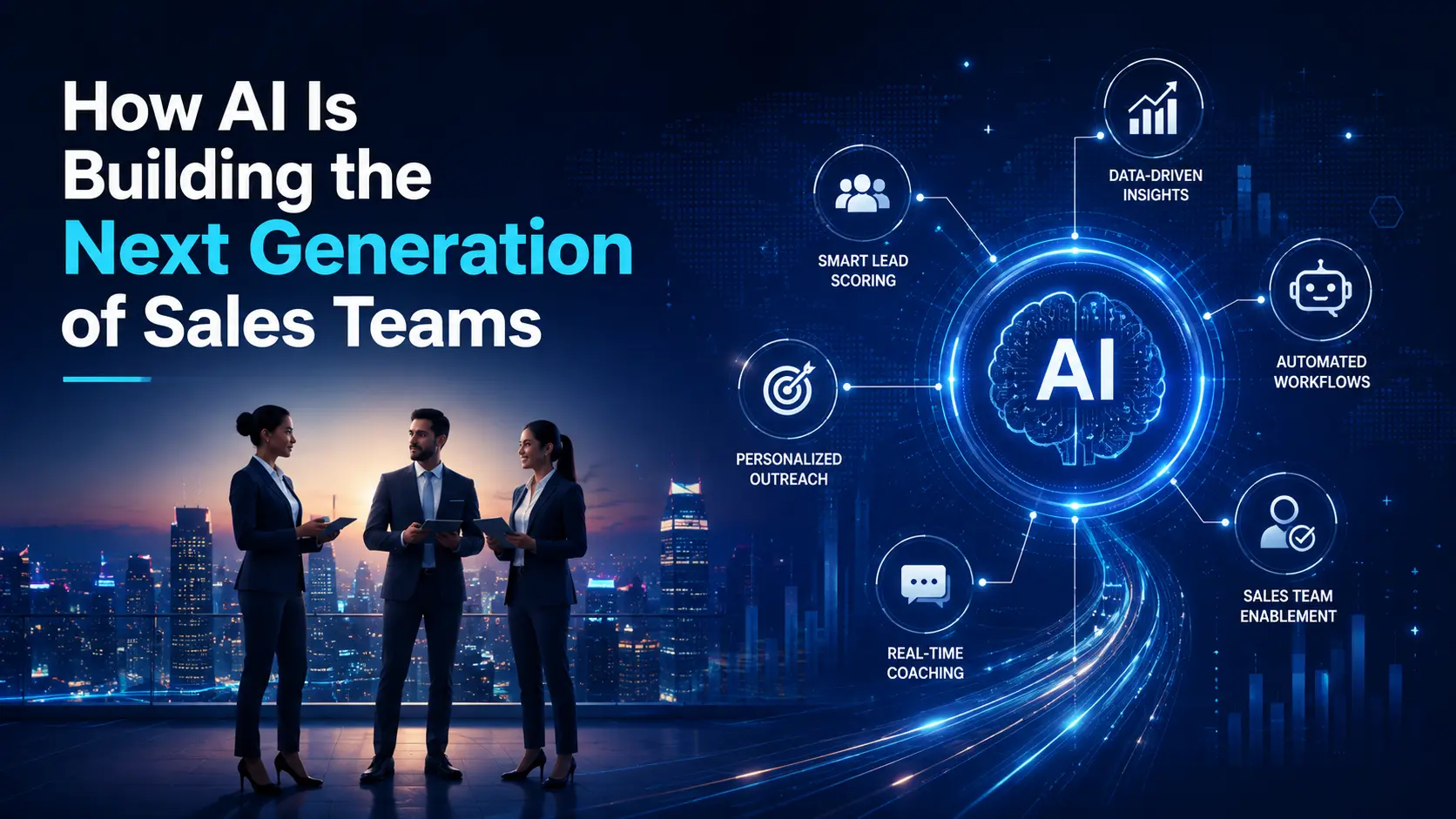
AI goes on a different path, giving signals of real demand, like new funding, fast hiring, a market expansion, a shift in digital behaviour or a competitor breaking. The question has shifted from who could buy to who might need. AI has always been supportive, from drafting emails to summarising calls. The latest generation is more autonomous; it can research an account, spot a buying signal, prepare outreach, follow up and discuss with a human after preparing the prospect.
Salesforce’s 2026 State of Sales report said 87% of sales organisations are using some form of AI, and 94% of leaders with AI agents find them significant to fulfilling business demand. It does not mean sales professionals are replaced. Now, they will be able to get five well-qualified leads instead of researching 50 companies manually.
How AI Is Changing Buyer Behavior
Companies often miss this part. Today, in this AI-driven industry, a buyer can easily ask an AI assistant which vendors to choose, how products compare, or who has the strongest reputation, and get a list before ever checking a company’s site. As per the latest research by HubSpot, 26% of CRM buyers used AI search while evaluating purchases, and those buyers used AI search while evaluating purchases, and those buyers were 36% more likely to convert.
That is why Answer Engine Optimisation (AEO) is crucial for businesses. It asks a different question than SEO does. The focus today is not “how people find us in search” but whether AI recommends us to customers. HubSpot mentions reviews, third-party sites, and owned content as the raw material AI draws on when deciding who to mention.
What It All Means
The best AI sales strategies are not about automating every single interaction. The key focus is deciding which parts of the job machines should own and which need a human. AI can easily process signals, rank accounts, and personalise routine outreach. But people help build trust, doing negotiations and reading what a customer has not said.
Experts believe companies can grow by redesigning the workflow end-to-end, not bolting AI onto an old process. The practical move is smaller than it seems: clean up the CRM, find the most expensive manual job and check how the company shows up when someone asks AI for a recommendation. The companies that will meet the next demand will be found by customers and also by the AI those customers ask first.
Frequently Asked Questions (FAQs)
1. How is AI changing sales and lead generation?
AI is helping sales teams identify buying signals, research prospects, qualify leads, personalize outreach and automate repetitive tasks. This allows salespeople to spend more time on high-value conversations.
2. What are buying signals in sales?
Buying signals are indicators that a company may be preparing to purchase. These can include new funding, rapid hiring, market expansion, changes in digital behavior, or other business developments.
3. Is AI replacing traditional lead lists?
AI is shifting sales teams from static lead lists toward real-time buying signals. Instead of contacting every company that fits an ideal customer profile, teams can prioritize businesses showing signs of active demand.
4. How are customers using AI when making purchasing decisions?
Customers can use AI tools to research vendors, compare products, evaluate options and create shortlists before speaking with a salesperson. This means businesses need to be visible and credible across the sources AI relies on.
5. What is Answer Engine Optimisation (AEO)?
Answer Engine Optimisation (AEO) focuses on making a business more likely to be mentioned or recommended by AI-powered search and answer engines when customers ask for product or service recommendations.
6. Why is AEO becoming important for businesses?
As buyers increasingly use AI to research products and companies, traditional search visibility alone may not be enough. Strong reviews, authoritative third-party mentions and useful owned content can help improve a company’s discoverability.
7. Can AI completely replace sales professionals?
No. AI can handle research, data analysis, lead qualification and routine outreach, but human sales professionals remain important for building trust, negotiating and understanding customer needs.
8. How can businesses start using AI in their sales process?
Businesses can begin by cleaning their CRM data, identifying repetitive and time-consuming tasks, and testing AI for prospect research, lead qualification or personalized outreach. Results should be measured before expanding AI across the sales workflow.
9. What is the difference between traditional lead generation and AI-powered lead generation?
Traditional lead generation often starts with predefined lists and broad outreach. AI-powered lead generation can analyze real-time signals to identify companies that are more likely to have an immediate need.
10. What should companies do to remain discoverable in an AI-driven market?
Companies should maintain accurate online information, build strong customer reviews, publish useful expert content and develop a credible presence across relevant third-party platforms. The goal is to become a trusted source that both customers and AI systems can discover.