Every founder and executive has the same problem: too much to read and too little time. News alerts, newsletters, LinkedIn posts and podcasts compete for your attention every day. In the middle of all that noise, a good business magazine still does something nothing else does as well: it filters, explains and connects the dots.
But “business magazine” is a broad term. A magazine aimed at a first-time founder is very different from one written for a CFO or a board member. This guide walks you through how to pick the right business magazine for entrepreneurs and C-level executives, which titles are worth knowing in India and abroad, and how to use magazines not only as a reader but also as a platform for your own story.
Why business magazines still matter in the age of social media
It’s fair to ask: if everything is online, why read a magazine at all? There are three solid reasons.
1. Curation. A good editorial team decides what deserves your time. Instead of scrolling through hundreds of posts, you get a smaller set of stories that are researched, edited and fact-checked.
2. Depth. Social posts give you headlines. Magazines give you context: why a company grew, how a CEO handled a crisis, what a policy change means for your sector. For a founder making decisions about hiring, funding or expansion, that depth matters.
3. Credibility. Being quoted or featured in a respected publication carries weight with investors, partners, customers and talent. That’s why many leaders treat a business magazine as both a reading list and a visibility channel.
Many of the best-known publications now work across print, digital, newsletters and events, so you can read them the way you prefer. Some also offer free online content alongside subscriptions. For example, Entrepreneur has an extensive library of online resources available for free, and Fast Company also provides a number of resources and articles outside its magazine issues for free.
What makes a business magazine right for entrepreneurs vs C-suite leaders?
Not every publication serves both audiences equally. Here is a simple way to think about it.
Entrepreneurs and startup founders usually want:
- Practical, tactical advice on funding, hiring, marketing and scaling
- Founder stories and lessons from failures
- Startup funding news and ecosystem trends
- Tools, frameworks and checklists they can apply this week
CEOs, CXOs and other C-suite executives usually want:
- Strategy, governance and leadership thinking
- Industry analysis and market intelligence
- Interviews with other CEOs and board members
- Rankings, benchmarks and deep-dive research
A good executive leadership magazine tends to be heavier on analysis, while an entrepreneur magazine leans toward stories and how-to content. The best business magazine for your needs often blends both, or you may end up reading one of each.
Top business magazines every founder and CEO should know
Here is a snapshot of publications that regularly appear on “best business magazine” lists. This is not an exhaustive ranking, because the right choice depends on your role, sector and country.
Global business magazines
- Harvard Business Review: Started in 1922, it is published from the Harvard Business School ecosystem. It is published by Harvard Business Publishing, an independent, non-profit organisation affiliated with Harvard Business School. It is a strong choice for leadership, strategy and management research.
- Fortune: Fortune first published in 1930, and it is famous for the Fortune 500 list that ranks the world’s companies by gross revenue. It suits readers who follow mature businesses and corporate performance.
- Forbes: Known for billionaire and wealth coverage, rankings and entrepreneur profiles. It is often recommended for founders who want inspiration and visibility.
- Inc.: Inc.’s main focus is on small businesses, though it also reports on movements within big corporations that affect the small-business landscape. It’s well known for the Inc. 5000 list of fast-growing private companies.
- Fast Company: It emphasises innovation, creativity and technology, covering themes across technology, design, leadership, entrepreneurship and creativity.
- Entrepreneur: Aimed squarely at founders and small-business owners, with plenty of how-to content.
- Bloomberg Businessweek and The Economist: Better suited to readers who want global markets, policy and economics analysis.
Business magazines in India
India has a rich ecosystem of business publications. Popular titles such as Business Today, Forbes India, Fortune India and Outlook Business can be bought online through subscription websites and digital news apps. Alongside them, startup-focused platforms matter for founders: for startup funding insights, one guide points to Inc42, Forbes India and YourStory, and it lists Forbes India, Fortune India and The CEO Magazine India for leadership development.
If you are a startup founder in India, you will likely benefit from mixing a national business magazine with a startup news outlet, so you see both the big picture and the funding and product details.
Always check each publication’s own website for current subscription options and prices, since these change often.
How to choose the best business magazine for you: a 7-point checklist
Use this checklist before you subscribe or commit time to any publication.
- Audience fit. Is it written for founders, executives or investors? A magazine for large-company CFOs may not help a first-time founder.
- Editorial quality. Look for named authors, sources, fact-checking and clear corrections policies.
- Depth vs. speed. Do you want daily news, weekly analysis or monthly long reads? Pick the rhythm that you will actually follow.
- Region and industry focus. An India-focused business news magazine will cover policy and markets that a US title may skip.
- Format. Print, digital edition, e-magazine, newsletter or app? A digital business magazine is easier to read on the move.
- Cost vs. value. Compare free online access, subscription cost and what you actually read.
- Opportunities for you. Does the publication accept expert contributions, interviews or guest articles? This matters if you also want visibility.
What C-level executives should look for
If you sit in the C-suite, your reading goals are different from those of a founder starting out. Consider these points.
- Strategic insight over news. You already get headlines from your team. Look for analysis that helps with decisions about capital allocation, talent, risk and growth.
- Peer perspectives. Interviews and opinion pieces by other CEOs, CFOs, CMOs and CTOs give you benchmarks you can’t find in a report.
- Governance and leadership topics. Boards, succession planning, ESG and culture are recurring themes in a good leadership magazine for CEOs.
- Data and rankings. Lists and research, such as company rankings, help you compare your performance with the market.
- Trust. For an executive, a source with a clear editorial standard matters more than a source with a big follower count.
What entrepreneurs should look for
If you are an early-stage or growing founder, your checklist looks a little different.
- Practical playbooks. Fundraising basics, hiring your first team, pricing, sales and marketing.
- Founder stories. Real accounts of what went wrong and how founders recovered are often more useful than success-only profiles.
- Funding and ecosystem news. Who is investing, which sectors are hot and what investors are asking for.
- Small-business realities. Cash flow, compliance, tax, banking and vendor decisions that big-company magazines rarely cover.
- Community. Newsletters, events and online communities attached to the magazine can open doors.
Special-interest business magazines worth knowing
Beyond the big titles, many readers now seek more focused publications:
- Women entrepreneurs: Magazines and sections dedicated to women founders highlight role models and funding opportunities that mainstream coverage can overlook.
- Success story magazines: Long-form profiles of founders and business leaders, valuable if you learn best from narratives.
- Industry-specific titles: Fintech, healthcare, manufacturing, retail and technology all have their own trade and B2B publications.
- Regional and local business magazines: Useful if your market is a city, state or country rather than global.
- E-magazines and digital-only titles: Flexible, searchable and often lower in cost than print.
Free vs. paid: how to build a smart reading stack
You don’t need ten subscriptions. A simple “reading stack” for a busy founder or executive might look like this:
- One global title for leadership and strategy (for example, a management-focused magazine).
- One regional business magazine for local market and policy news.
- One startup or industry outlet for funding and sector updates.
- One or two free newsletters for daily summaries.
Review your stack every quarter. If you’re not opening an issue, cancel it. Time is your scarcest resource.
Using a business magazine to grow your own brand
Here’s something many readers overlook: business magazines are not only for reading. For entrepreneurs and executives, they can also be a visibility channel.
Being featured can help you with:
- Credibility: third-party recognition tells customers and investors you are worth taking seriously.
- Thought leadership: a published opinion piece or interview positions you as an expert.
- Hiring and partnerships: talent and partners often check a company’s media presence before reaching out.
- SEO and discoverability: a mention or backlink from a quality publication can help your own website’s visibility.
Ways to get featured
- Pitch a story, not a promotion. Editors want a lesson, a data point or a perspective, not an advertisement.
- Offer an expert comment. Many writers look for credible sources on breaking news in your sector.
- Write a guest article. Some magazines publish contributed articles from founders and executives. Follow their guidelines and keep the writing useful.
- Share a real success story. Founder journeys with lessons are popular, especially when they include numbers and mistakes.
- Prepare your assets. A short bio, a high-quality headshot, company facts and links make an editor’s job easy.
Red flags to watch out for
Not every “magazine” is what it appears to be. Be careful with:
- Pay-to-play features presented as editorial. Paid placements aren’t automatically wrong, but they should be clearly labelled. If a publication guarantees a “cover story” for a fee with no editorial standards, think twice.
- Fake awards and rankings. Some outlets sell “Top 10 CEO” badges that carry little weight.
- No named editors or contact details. A credible publication shows who runs it.
- Copied or thin content. If articles look recycled or lack sources, the magazine adds little value.
- Pressure tactics. Anyone promising guaranteed press coverage or demanding payment before they review your story deserves caution.
A simple test: would you be comfortable showing this publication’s feature to an investor or a client? If the answer is no, it probably won’t help your reputation.
Where The Success Prime fits in
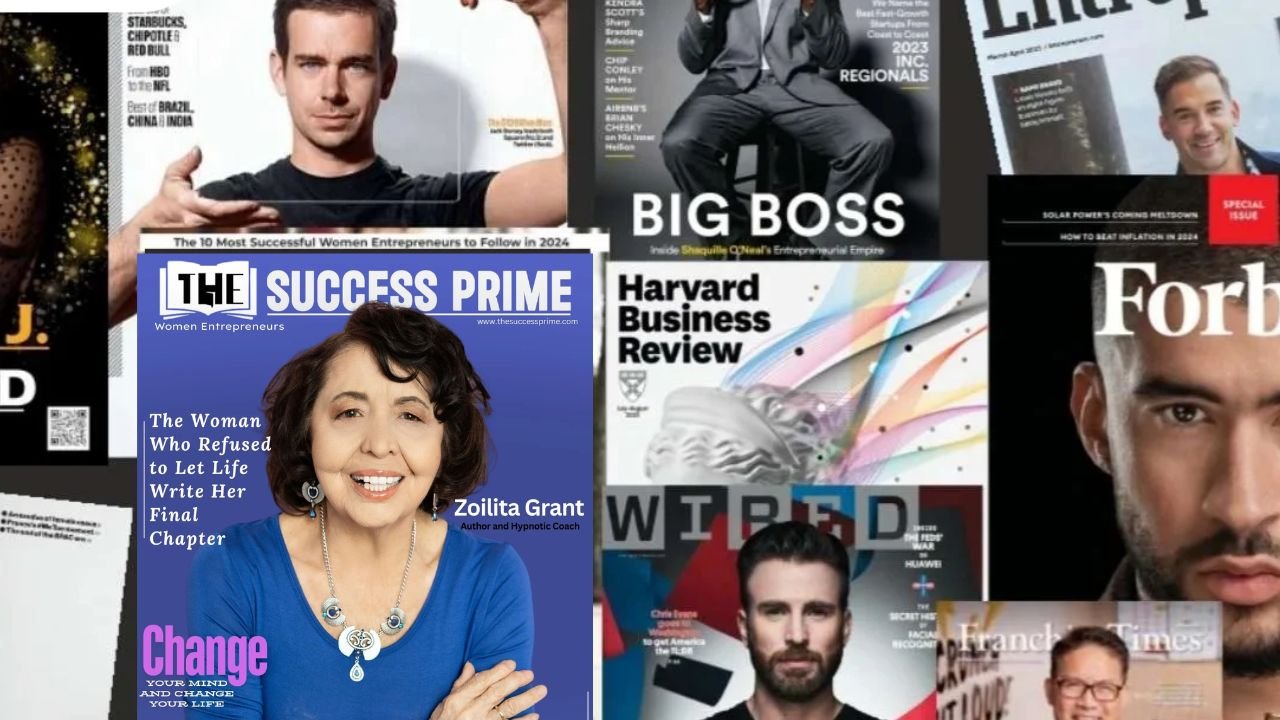
The Success Prime is a digital business magazine that publishes business blogs, news, success stories, women entrepreneur profiles and leadership insights, with an e-magazine and a guest post section for contributors. It is aimed at entrepreneurs and C-level executives who want practical perspectives and a platform to share their own experience. Readers can browse founder stories, learn from leaders in different industries, and, if they have a story to tell, explore the guest post route.
Quick comparison: which type of magazine suits you?
| If you are… | Look for… | Example types |
|---|---|---|
| A first-time founder | Practical playbooks, startup news | Entrepreneur-focused and startup outlets |
| A growing small-business owner | Small-business strategy and funding | Inc.-style small business titles |
| A CEO or CXO | Strategy, governance, peer interviews | Management and leadership journals |
| An investor | Funding, markets, rankings | Finance and business news magazines |
| A woman entrepreneur | Role models, funding networks | Women entrepreneur sections and magazines |
| A reader who prefers stories | Long-form founder profiles | Success story magazines |
Frequently asked questions
What is the best business magazine for entrepreneurs?
It depends on your stage and region. Titles such as Entrepreneur, Inc. and Fast Company focus on founders, while Harvard Business Review suits leadership and strategy. In India, look at Forbes India, Business Today, Fortune India, Outlook Business and startup outlets like Inc42 and YourStory.
Which business magazine is best for CEOs and C-suite executives?
Publications that cover strategy, governance and peer perspectives, such as Harvard Business Review, Fortune and Forbes, are common picks. Choose based on your industry and how much depth you want.
Are there free business magazines online?
Yes. Many publications offer a mix of free online articles and paid issues, and several run free newsletters. Check each site for what is available without a subscription.
Is a digital business magazine as good as print?
Content quality depends on the publication, not the format. Digital editions are easier to carry and search, while print suits readers who prefer fewer screens.
How can a founder get featured in a business magazine?
Pitch a useful story or expert comment, follow the publication’s guest or contributor guidelines, and prepare a short bio and assets. Avoid paying for guaranteed “cover stories” without checking the outlet’s credibility.
How often should I read a business magazine?
Match it to your schedule. A weekly or monthly read with a few focused articles is more useful than skimming everything daily.
What is the difference between a business magazine and a business newspaper?
Newspapers focus on daily news. Magazines usually offer deeper analysis, profiles and features, with more time for reporting and editing.
The bottom line
The right business magazine for entrepreneurs and C-level executives is the one you will actually read, trust and use. Start with your role and goals, build a small reading stack, and treat the magazine as both a learning tool and, when the time is right, a platform for your own story.
Choose quality over quantity, check the editorial standards, and be careful with pay-to-play offers. Do that, and a few well-chosen publications can sharpen your decisions, widen your network and strengthen your reputation for years. business magazine, business magazines 2027, business magazine for entrepreneurs, C-level executives, C-suite leaders, entrepreneur magazine, leadership insights, business insights, corporate leadership, business strategy, industry trends, executive magazine, business growth, entrepreneurship.