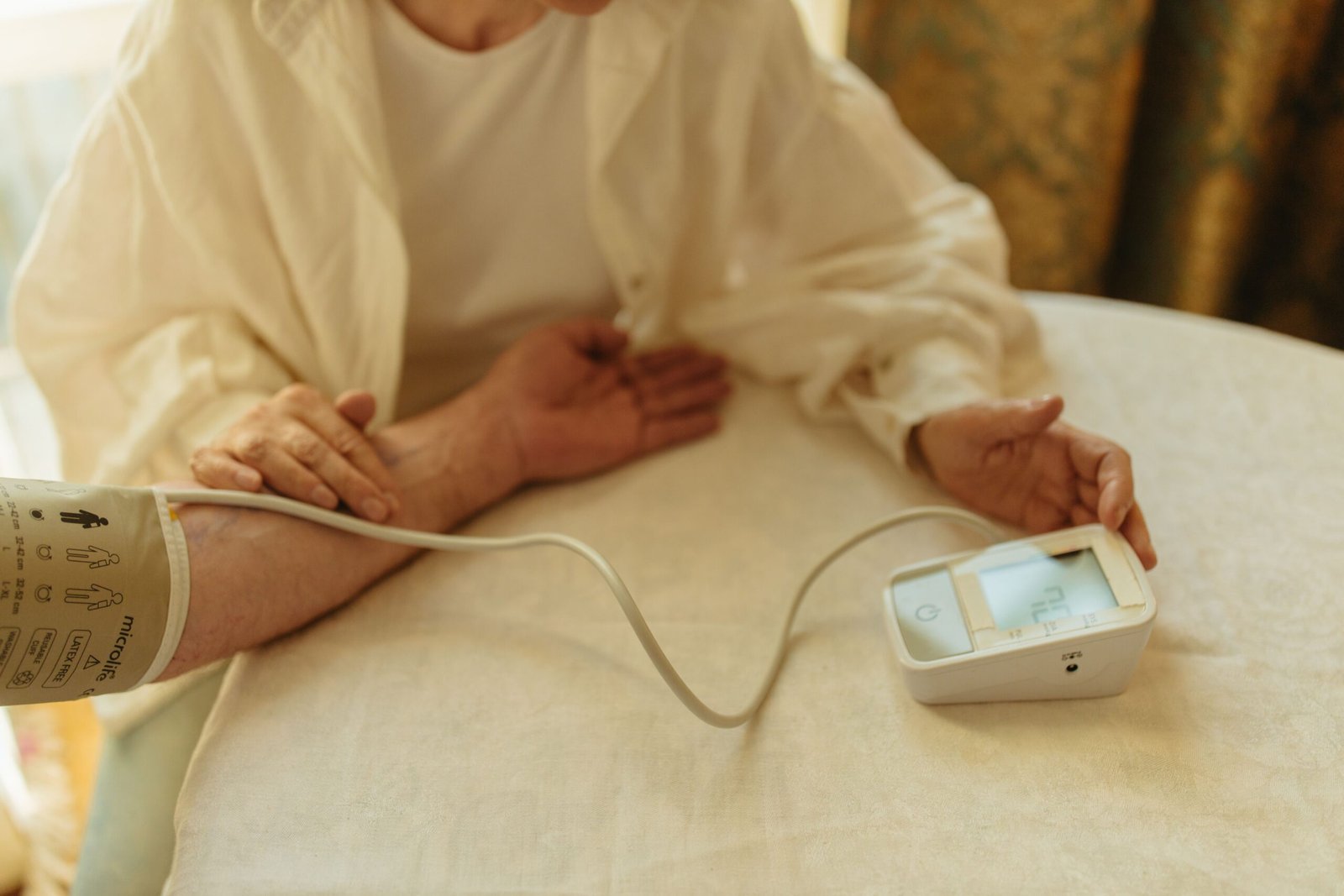
Home Blood Pressure Check: Setup, Posture and Timing Explained: A Step-by-Step Guide
Imagine a scenario where you are getting your blood pressure checked during duty in a health camp and you come to know that the blood pressure levels are slightly elevated. First, it might worry you. Months may pass but the number might be stored in your muscle memory. But what matters the most is that BP is something which naturally changes throughout the day. There are various factors which can affect a reading. The real inside lies in the pattern where you have to measure the blood pressure levels consistently and keep a track over time and understand before a small warning becomes a better concern.
Everything You Need on the Table Before You Begin
Buying an expensive blood pressure monitor is not enough. A good monitor may give an inaccurate reading if you have placed your arm incorrectly or using the wrong cuff size. You must choose a monitor that has been properly validated by an important organization.
With the validated automatic upper arm monitor, use the correct technique. Avoid relying on finger monitors for routine measurement. Check your cuff size before buying it.
Get Set First: How to Prepare Your Body and Your Space
Avoid coffee, tea, drinks and soda. Do not consume cigarettes or nicotine gums as it raises the heart rate. Avoid consuming alcohol as it fluctuates the blood vessels. Do not engage in exercise and physical activity. But it should be kept in mind that reading should be taken during that time which must be accurate for the moment so that it can give a picture for the rest of the week. While taking the reading your bladder must be empty.
How the Reading Is Actually Taken, Step by Step
- Get yourself seated. Put your arm on the table. Make sure the cuff is right on your skin. Do not put it over your shirt sleeve. The material can pile up. Cause pressure to be uneven. The bottom part of the cuff should be two centimeters above the bend of your elbow. The line that is printed on the cuff should be, over the artery.
- Your arm should be at heart level. When the table is lower than your heart then you place a folded towel under your elbow to adjust the angle. When your arm is below your heart then you will have pressure and the number will be high.
- Press the start button. Do not talk. Do not shift. Breathing should be slow and normal not held. The cuff inflates, deflates. The process takes thirty seconds.
- Record the number. Systolic over diastolic pulse alongside. A small notebook works. A phone app works. The format matters less than consistency.
- Wait one minute. Take a reading. Discard the first if it differs from the second by than five points and take a third. The average of the two is the number to log. One reading is noise. Two readings, averaged, approximate the truth.
How Many Times a Day, How Many Days a Week?
Morning before medication before breakfast. Evening, before dinner. Two readings each session one minute apart. That is the protocol endorsed by the American Heart Association and the European Society of Hypertension for the week of monitoring. After that three to four mornings per week tend to give the physician data to adjust treatment without drowning in numbers.
Is Your Reading Normal? How to Read the Result
Blood pressure level is measured in millimetres of Mercury. It has maybe two numbers which are 120 and 80. A reading below these numbers are considered quite normal. But if the reading is around or above these numbers, then it might need further assessment. At the very beginning level, blood pressures can be regulated through proper diet, physical activity, improvement and sleep quality and other lifestyle related modifications. But it also should be noticed that one reading cannot provide you with an ultimate and clearer picture. You must record the blood pressure levels for half a month and then consult the medical professional.
Accurate Numbers Come From Steady Habits
Blood pressure measurement should be made a habit rather than merely an event. Don’t consume caffeine or tobacco prior to measuring the blood level. Avoid doing any rigorous exercise before testing. Do not take every numerical value seriously and get anxious about it. But if the blood pressure level has been consistent for the past 2 weeks then you must go to your nearby healthcare center so that adequate measures can be adopted.
FAQ
1. Why is my BP higher at the clinic than at home?
Many people get a higher reading in a clinical setting because of nervousness. This is called the white coat effect. Home readings taken in a calm, relaxed state often give a more realistic picture, which is why doctors ask for a home log.
2. Which arm should I use to measure blood pressure?
Use the same arm every time. At the start, it helps to check both arms once. If the readings differ noticeably, use the arm with the higher reading and mention the difference to your doctor.
3. How long should I sit quietly before taking a reading?
Sit calmly for about five minutes before you press start. Keep your back supported, feet flat on the floor and legs uncrossed. Crossed legs or a dangling arm can push the number up.
4. Does the cuff size really change the result?
Yes. A cuff that is too small can show a falsely high reading, and one that is too large can show a falsely low one. Measure your upper arm and choose the cuff size the manufacturer recommends.
5. Is a wrist monitor as good as an upper-arm monitor?
Upper-arm monitors are generally preferred because they are more reliable and easier to position correctly. Wrist and finger devices are more sensitive to arm position, so use them only if your doctor approves.
6. Should I take my BP medicine before or after the morning reading?
Doctors often ask patients to measure in the morning before taking medicine, so the reading shows how well the treatment lasts through the night. Still, follow your own doctor’s instructions and never skip or delay a dose just to take a reading.
7. What if my two readings are very different from each other?
Small differences are normal. If the gap is large, rest for a few minutes, check your posture and cuff position, and take another reading. Log the average of the valid readings rather than the highest or lowest one.
8. Why does my BP change between morning and evening?
Blood pressure naturally rises and falls through the day with activity, stress, food, sleep and hormones. That is why a pattern over several days matters more than a single reading.
9. At what reading should I go to the hospital instead of waiting?
Generally, a reading of 180/120 or higher is a serious warning. If it comes with chest pain, shortness of breath, severe headache, vision changes, weakness or difficulty speaking, seek emergency care immediately. Without symptoms, rest for five minutes, check again, and contact your doctor if it stays that high.
10. Can checking my BP too often make it worse?
It can. Repeated checking often raises anxiety, and anxiety raises the number, which creates a loop. Stick to the schedule your doctor suggests and avoid testing every time you feel uneasy.
Read Also: