The Indian consumer market has never lacked in terms of its density, but over the past decade, a new type of noise has been introduced, namely, the brands that make a bang, offer high discounts, and evaporate without leaving any trace. The emergence of Mamaearth under the Honasa Consumer umbrella is unique not only due to its ability to find products that are natural, which has since become the motto of every second-rate label, but because it had considered trust as an asset, distribution as a marathon. Another myth that is punctured by the success of the brand in boardrooms is the comfortable myth that D2C is a channel strategy. D2C is a credibility strategy in India, and it is not achieved by slogans but by repeat purchase, regular delivery of products to consumers, and the readiness to leave the initial story of its founder.
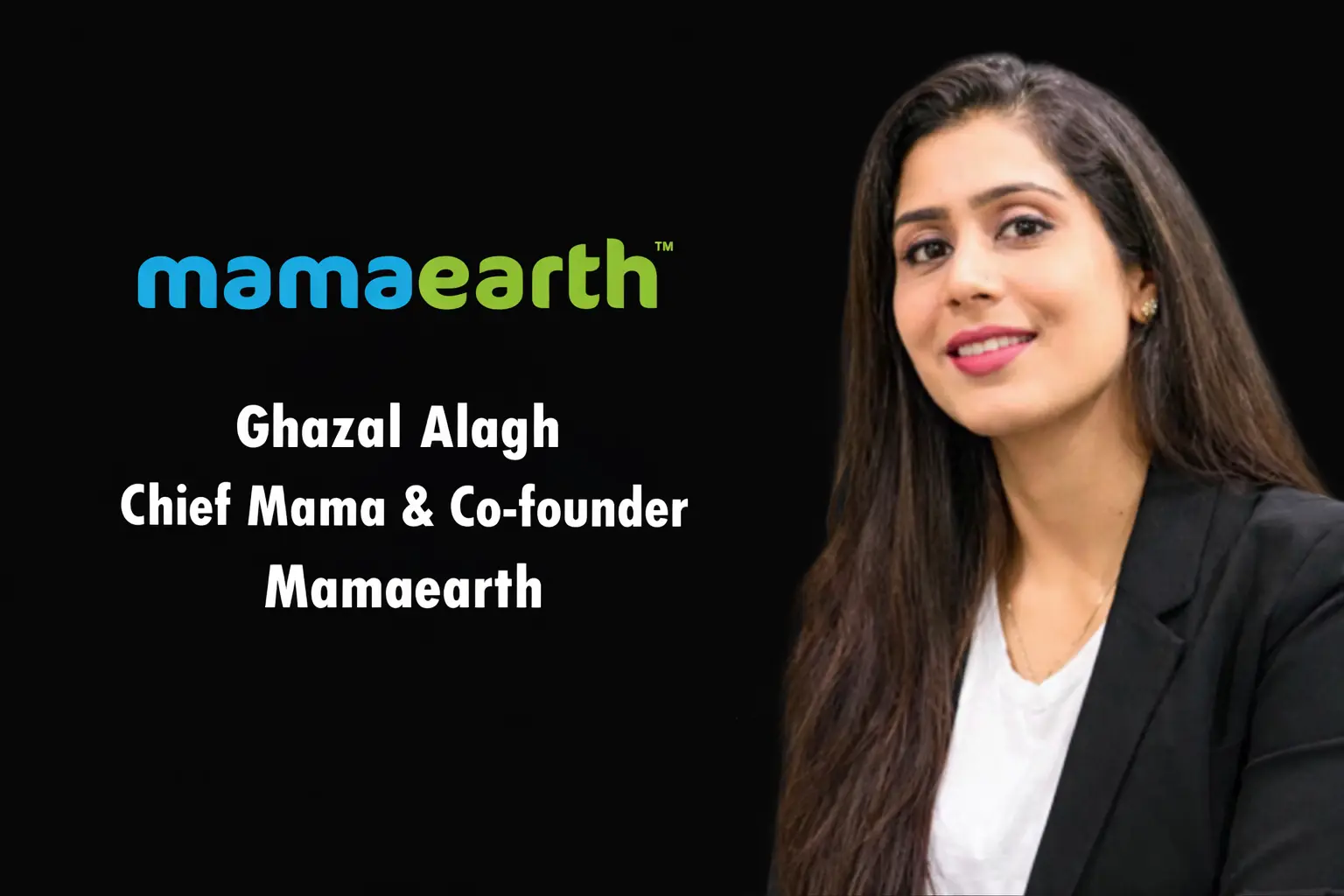
The fact that Ghazal Alagh was publicly positioned through the perspective of motherhood has not been accidental. The story of origin is captured in one commercially comprehensible sentence by an external profile of the founders, they could not find toxin-free products to their baby and decided to create them, and the founding blend is made up of Varun Alagh, with some experience in the FMCG industry, and Ghazal Alagh, with an entrepreneurial streak.
This brand story, which Mamaearth supports itself with by the logic of by parents, to parents, is based on the need to create safe, certified toxin-free goods to address the problems that parents have. This observation is not emotive, but it is tactical. Parenting generates urgent purchase intent which is socially validated in the context of personal care, since the situational need states are frequently vague. A promise made to a baby is a promise on-ramp in the house.
The finer point of the narrative is what ensued – when the business was forced to expand beyond the original emotional hook. A D2C brand which does not escape its niche creation is not a big company, it is a cult product. Mamaearth did not just add more baby care products to its portfolio but instead broadened its range of products into other consumer care segments and it was not a cosmetic adjustment but the systematic building of a multi product consumption machine.
The profile of the founders published by EY mentions the high rate of product growth and the digital-first approach adopted by the company that relied on social media to acquire customers, as well as the scale development as indicated by the revenue rates in FY22. One may hate the use of toxin-free vocabulary or not, but the reasoning makes sense: once a customer puts her child in your custody, she can put herself there, as well.
Second, less romantic is another element that tends to divide sustainable and non-sustainable D2C brands, which is disciplined innovation leadership. The profile of Honasa herself lists Ghazal Alagh as the co-founder and Chief Innovation Officer and that it was her idea that Mamaearth was created and the other brands under Honasa were developed. This is not just a title but it means that innovation was not a marketing afterthought but a leadership role. Scaling D2C brands behave more like first product companies followed by content companies. The message is appealing; product is memorable.
Decision to be omnichannel is the third ingredient, which is often confused by founders who idealize pure D2C. Competitors in this market often refer to this as a shift, as though offline retailing is a compromise to the realities. Actually, in India, offline is not the conquest of D2C; it is the support of credibility of consumer brands. The presence in physical form lessens perceived risk to the buyer, increases reach to the digitally native, and has the product in the visual field with legacy FMCG competitors.
The coverage of Honasa strategy by seems to be a solid measure of the extent of this omnichannel push: it mentions a company commentary according to which the portion of offline channels contributed to the total rose by 9 to 35 percent over the period of three years to FY24 and states that Mamaearth already had almost 2 lakh FMCG retail outlets by the end of June 2024. These are not vanity metrics. They are an indication that the brand has decided on the labor of distribution, on stockists, relationships with retailers, secondary sales presence, instead of using performance marketing and influence loops alone.
The brand has an additional strategic dimension of the credibility structure: certification-based claims and safety verbiages. The very content of Mamaearth of our story has highlighted safe and certified toxin free products and international standards. In the leadership page of Honasa, Mamaearth has been referred to as the first MADE SAFE-certified brand in Asia. These assertions are not just a decoration used in marketing, these are risk management in the field where consumers are increasingly becoming sceptical. Nevertheless, doubt should remain disciplined: skepticism is revengeful with the contemporary consumer. Only time will tell whether the promise is maintained by the product experience over time, across batches, across geographies and across retail environments.
Another aspect that should be mentioned is the possibility of the founder to live within contradiction and not lose his direction. Mamaearth launched a brand when the idea of natural was no longer any longer unique, and yet it decided to go large scale distribution instead of living in the premium and niche segment. It had toted the trust-based parent segment and expanded its personal care to wider segments where differentiation is more difficult and the competitors are better endowed. It rode digital-first acquisition, and developed offline muscle that is sluggish, expensive to operate and ruthless when things go amiss. This constitutes the type of strategic posture that would appear so after the fact once it has worked.
A D2C brand is an outstanding brand when it ceases to act like a campaign as it begins to act as an institution. The development of Mamaearth is indicative of an institution-building attitude: build trust in a high-intent entry category, diversify additively to other categories without causing any loss of the promise, and de-risk the growth model by diversifying distribution of online and offline as opposed to gambling on the economics of a single channel.
How Mamaearth came into sight is no longer the more promising question. Visibility is cheap. The point is whether Indian D2C firms are allowed to stay culturally D2C: creating a fast feedback process, product-oriented iteration, being close to customers, and opening an offline-intensive FMCG distribution engine. The distribution architecture and scaling of Honasa is being actively re-examined, which Moneycontrol reports indicates, meaning that this firm is appreciating that scale must be subject to structural modification at the moment. It is the less glamorous task of growth a reconstruction of the plane in the air.
FAQS
1. Which strategic wedge in the early positioning of Mamaearth caused can be most defensibly?
A parenting-focused trust that guarantees safe, certified toxin-free items produced an instantaneous, socially validated buy intent and established credibility through the use of high stakes.
2. What is the rationale behind omnichannel expansion to the extent that it is meaningful to the Mamaearth scale despite the brand being a digital-first?
Reports of offline contribution growth and retail outlet expansion indicate that offline distribution was being viewed as a key source of growth since it was broadening reach and reducing reliance on primarily digital acquisition economics.
3. How is it different between a citizen-led consumer brand and an enterprise-led consumer business of scale?
Although the founder’s story may provide access, scalability necessitates institutional capabilities, portfolio discipline, distribution management, and repeatable product quality across channels, hence removing the need for the original story.
4. What is the proper evaluation of claims of certification and safety of personal care brands by investors?
It can reduce customer anxiety as a reputational risk credibility weapon, but in order to avoid blowback, it must be supported by a consistent product experience and a strict claim management plan.
5. How is the most difficult shift of Indian D2C brands in trying to be the leader of the category?
Fast D2C delivery, close proximity to consumers, and ongoing offline distribution system development and reconfiguration based on various failure modes and incentives.