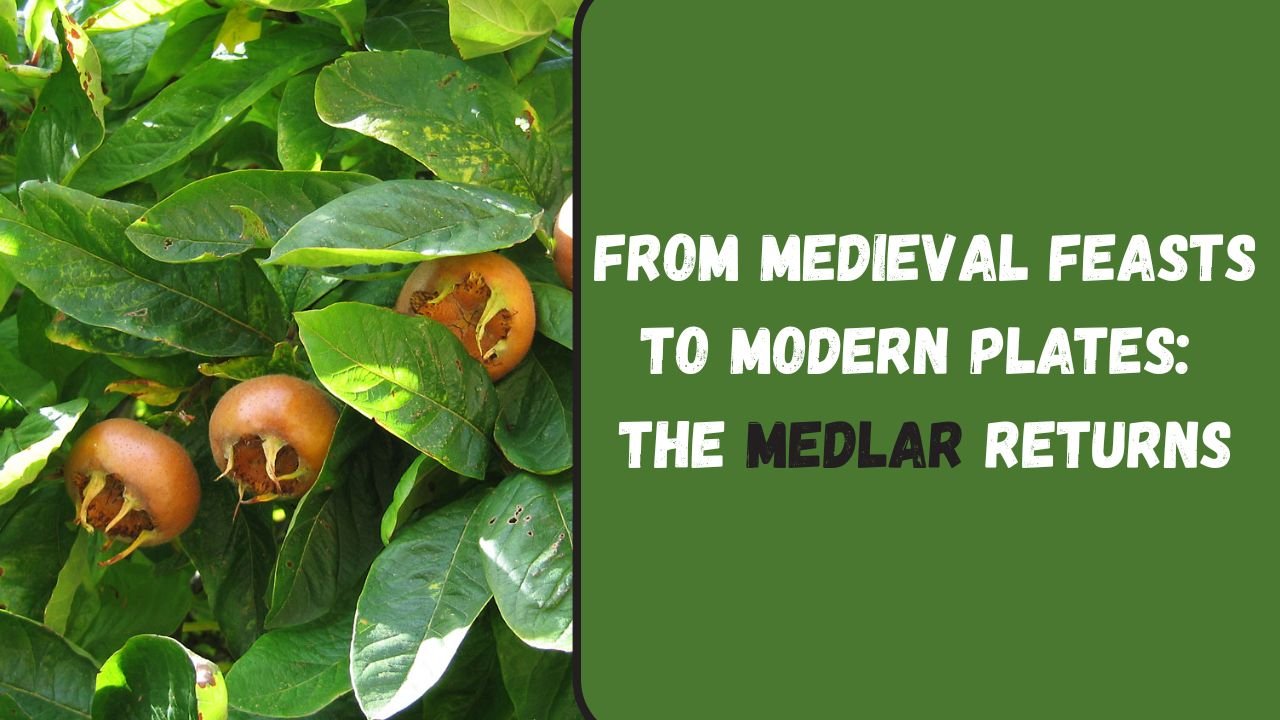
Once a famous fruit even among Royals is almost unknown to the world today. Hundreds of years ago Medlar was a beloved sweet treat before the arrival of sugar. It was one the favourites among the Persians, the Greeks, the Romans and most of all among the Britishers. There are folks from Medieval ages portraying various uses of Medlars, especially for treating diarrhoea.
The Return of Medlar: Exploring a Forgotten Medieval Fruit
If we were to believe the tales, it is said that Henry VIII made this fruit fashionable among royals. On his trip to France, among various royal treasures presented to the king of France, large quantities of Medlars too were the part of these gifts.
Once a famous fruit, lost its glory to an extent that it just remained a laughing stock and is almost unknown nowadays. The French began naming it as Dog’s arse, Shakespeare called it as ‘open arse’ and in one of his poems D.H Lawrence called Medlars ‘autumnal excrementa’.
So what could have gone wrong? How did this fruit fell out of favour?
After World War II the popularity of once a famous fruit declined heavily. It was a time when habits, lifestyle, living standards, tastes and preferences changed tremendously. Unlike apples and other fruits, you can’t pluck a medlar from a tree and eat. They are plucked and stored in a straw for several weeks. The process is called bletting. During the process the fruit completely changes. When the fruit is bletted it becomes sweeter and softer and can be carved out from a spoon and eaten. It is very much possible that preparing medlars just took too long and thus fell out of taste and memory.
The Digital Magazine: The Success Prime brings forward a story of a forgotten fruit which seems to be withstanding the test of time.
Israelmore Ayivor in his book Shaping the Dream has said:
“Every tree in the forest has a story to tell. Some of them were burnt but they endured the fire and got revived; some of them were cut, their barks injured, some people pick up their leaves to make medicines for their sicknesses, birds used their leaves to make their nests, etc. Upon all these, the tree is still tree!”
The fruit seems to be reviving in the market in form of jellies and tarts. Additionally it has multiple factors which contributes to its revival.
Taste: It’s tastes is similar to the taste of an apple sauce and tastes best when it is over ripe.
Immunity System: In addition to that, the various parts of Medlar plants is believed to have anti-oxidant properties which strengthens the immunity system.
Vitamin C: The fruit is rich in Vitamin C .Thus it helps in curing scurvy. Deficiency of of Vitamin C leads to gum disease and skin problems.
Vegetable fibre: People suffering from constipation are advised to consume Medlars as it rich in vegetable fibres. These trees can survive harsh winters and long hot summers.
Reduces the risk of kidney stone: Medlar has properties that reduces the risk of kidney stone by helping out to drain the uric acid.
Cure for bleeding gums: In case you have bleeding gums you can take an unripe medlar fruit, crush it and mix this with a cup of boiling water. Leave the solution for half and hour. Rinse your mouth thereafter several times a day. You will experience the benefits soon.
There’s a famous idiom that says ‘you cant keep the good man down’. Going by the same description Medlar which was loved by millions and later vanished from the memory has come a long way from medieval ages to twenty-first century in search of its lost glory.