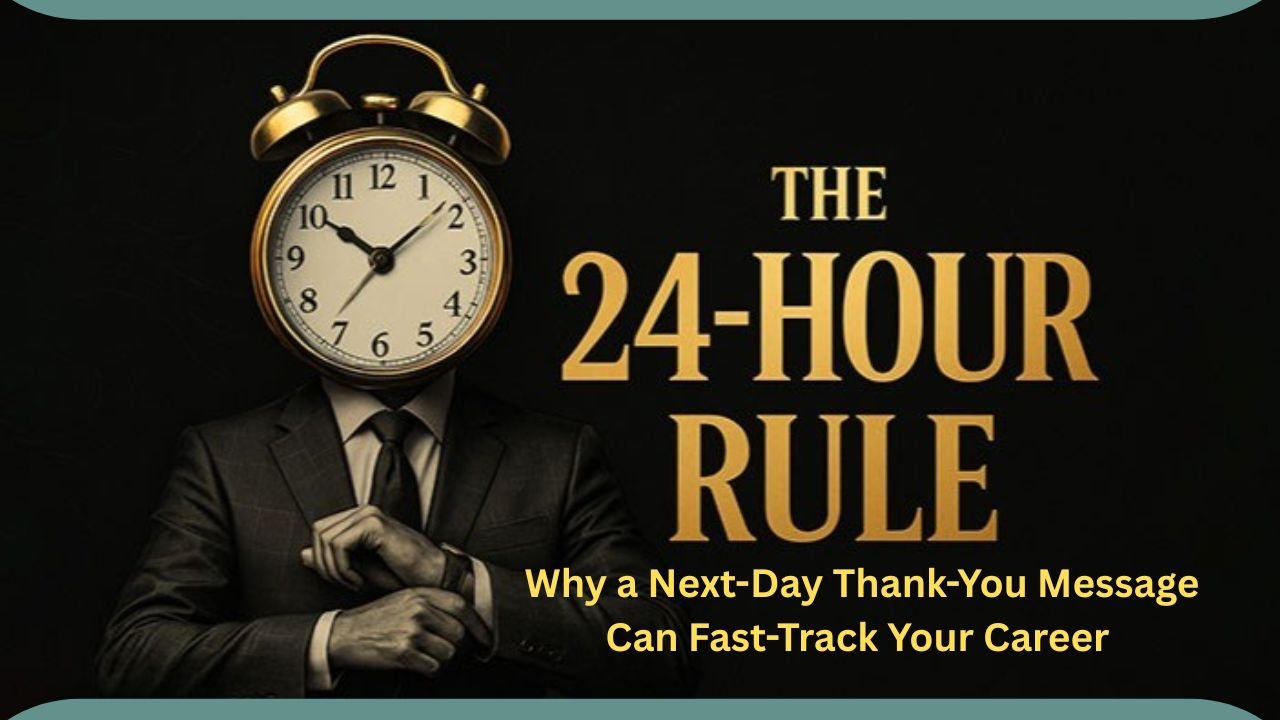
A short, sincere note takes two minutes to write. Skipping it can quietly cost you promotions, introductions and opportunities you never knew were on the table.
Careers are rarely made by one big moment. More often they are built from dozens of small ones: the way you answer a colleague, the way you show up to a meeting, the way you react when somebody does something kind for you. Among these small moments, one of the simplest and most overlooked is the next-day thank-you, a quick message of appreciation sent within 24 hours of receiving a gift, a favor or an opportunity.
It costs nothing. It doesn’t require fancy stationery or perfect wording. Yet in a workplace where inboxes overflow and attention is scarce, a genuine thank-you email, text or handwritten note still has the power to make you memorable. This guide explains why gratitude at work matters, the three situations where it counts most, and how to write a thank-you message that actually lands.
Key Takeaways
- Send it within 24 hours. A prompt thank-you shows respect, good manners and organization.
- Be specific. Mention a detail from the event, conversation or favor to prove you were paying attention.
- Make it a habit. Consistent gratitude builds your professional reputation, strengthens relationships and can open doors to future career opportunities.
Why a Thank-You Message Matters More Than You Think
Professional etiquette is often treated as old-fashioned, but managers, business owners and hiring teams still notice it. Good business etiquette signals character, emotional intelligence and respect for other people’s time. When someone goes out of their way to help you, a thank-you tells them the effort registered.
The reverse is also true. People rarely announce that they are judging you by a missing thank-you, but many quietly do. A pattern of silence can come across as entitlement, the sense that you expect good things to arrive as a matter of course. And entitlement is not a quality that makes leaders eager to invest in your career development, recommend you for stretch assignments or put your name forward for a promotion.
There is a practical angle too. One piece of sales research found that roughly 36% of B2B decision-makers will not do business with a salesperson who shows poor etiquette. You don’t need to work in sales for that number to be a warning: how you behave shapes how others judge your credibility, whatever your job title.
Situation 1: The Gift
Imagine your boss hands you tickets to a concert, a play or a game featuring your favorite team. It’s a thoughtful gesture, often chosen with your interests in mind, and it usually isn’t part of your pay or benefits.
Most people send a quick thank-you right away, often through the office chat tool. That’s polite, and it’s the minimum. The employees who stand out are the ones who follow up after the event. A short text or email, ideally with a photo or a personal detail, tells the giver that the gift was truly enjoyed. You might mention how thrilling the last few minutes of the game were or how the concert exceeded your expectations.
This second message does something the first can’t. It shows that you don’t treat workplace perks as automatic, and that you understand someone took time and effort to give you something of value. Employers notice the difference, and the lack of any acknowledgment tends to be noticed too.
What to write: “Thank you again for the tickets. The final quarter was unbelievable, and my family had a great night. I really appreciate you thinking of us.”
Situation 2: The Professional Favor
Favors at work come in many forms. Your manager might offer you a seat at the company table during a major charity event, introduce you to an influential contact, recommend you for a special project or invite you to an industry conference. Each of these is an investment in you, and each deserves more than a casual nod.
Start with the RSVP
If you receive an invitation, your first job is to reply promptly. RSVP comes from the French Répondez, s’il vous plaît, meaning “please respond.” It sounds basic, but plenty of people ignore it. Benchmark data from an invitation platform puts the response rate for conference and meeting invitations at about 66%, which means a third of invitees never answer. Replying quickly makes you look organized, reliable and interested. Not replying can make you look indifferent.
Then Say Thank You Twice
After the event, send a next-day message. Name something specific: a good conversation, a useful introduction, a speaker who gave you an idea. This is also an excellent moment for networking, because your note reminds the host that you made the most of the opportunity.
The same approach works when a manager gives you career advice, vouches for you or opens a door with a new contact. You don’t need to write a formal letter every time your boss buys you a coffee, but meaningful favors deserve meaningful appreciation. When you thank someone on the spot and again afterward, you have shown gratitude twice and made a stronger impression.
A small caution: some managers, especially those from older generations, put real weight on traditional courtesy. A prompt written thank-you may matter more to them than you expect.
What to write: “Thank you for including me at the table last night. I enjoyed meeting your colleague from the foundation, and the conversation about community partnerships gave me several ideas. I’m grateful for the introduction.”
Situation 3: The Job Interview
Candidates generally get three chances to impress a prospective employer.
- Your application materials: your resume, application and any assessment results show whether you have the skills and abilities the job requires.
- The interview itself: here you can talk about accomplishments, answer questions thoughtfully and explain where you want your career to go.
- The follow-up: a thank-you message sent within 24 hours reinforces the impression you worked so hard to create.
Many applicants never use the third chance, which is exactly why it works.
Make It Personal, Not Generic
A stock paragraph that could be sent to any hiring manager does little. Refer to something that came up in your conversation: the company’s growth plans, a challenge the team is trying to solve, an idea the interviewer shared. Briefly restate your interest in the role and say why it excites you.
This matters even more now that artificial intelligence can generate a polished resume or cover letter in seconds. When everyone can produce clean, professional text, personalization becomes the differentiator. A thoughtful interview follow-up shows communication skills, attention to detail and an understanding of professional etiquette. It also tells the employer that you recognize someone invested time in considering your future.
What to write: “Thank you for speaking with me today. I especially enjoyed hearing about your plans to expand into new regions, and it made me even more excited about contributing to that effort. Please let me know if I can provide anything else.”
How to Write a Good Thank-You Message in Four Steps
You don’t need a long message. Three or four sincere sentences are usually plenty.
- Open with gratitude. State plainly what you’re thankful for.
- Add one specific detail. Mention the moment, conversation or outcome that stood out.
- Say what it meant to you. One line on the impact makes the note feel real.
- Close warmly. Look ahead, offer help or restate your interest, then sign off.
Which Format Should You Use?
Email suits interviews and most business favors. A text or chat message works for casual gifts between colleagues who already communicate that way. A handwritten card can make a big impression for significant favors, major mentors or senior leaders. Choose the channel the recipient is most likely to appreciate, and keep to the 24-hour window whichever you pick.
Common Mistakes to Avoid
- Waiting too long. The longer you wait, the more awkward it gets. Aim for the next day.
- Being vague. “Thanks for everything” could apply to anyone. Details make it genuine.
- Over-writing. A page of flowery language can feel insincere. Keep it short.
- Copying a template. Hiring managers and bosses can spot a generic or AI-written message quickly.
- Only thanking once. For bigger favors, a quick thank-you on the day and a more thoughtful note afterward is the strongest combination.
Gratitude Is a Career-Building Habit
The real payoff of saying thank you isn’t any single note. It is the reputation you build over years. People who express appreciation consistently are seen as thoughtful, trustworthy and easy to work with. They are the ones who get recommended, mentored and trusted with bigger responsibility, because others enjoy helping them.
You can never be sure which professional relationship will shape your next promotion, assignment or career move. A boss you thank today may be the person who vouches for you in a room you’re not in. A recruiter you follow up with may remember your name when another opening appears.
Gratitude costs very little. Failing to show it can cost you opportunities. So the next time someone gives you a gift, offers a favor or considers you for a chance, take two minutes and send that message tomorrow morning. It might be the smartest career move you make all week.
Frequently Asked Questions
How soon should I send a thank-you message?
Within 24 hours is the standard. A same-day note is fine too, and a longer follow-up the next day can add a second impression.
Is a text message enough for a thank-you?
For casual gifts or colleagues who normally text, yes. For interviews and formal favors, email or a handwritten note is better.
Should I thank someone for small favors?
A quick verbal or chat thanks is fine for small things. Save the fuller note for meaningful favors, gifts and opportunities.
Can I use AI to write my thank-you note?
You can use it to polish your wording, but the message should still reference real details from your experience. A generic note defeats the purpose.
What if I forgot to send a thank-you?
Send one anyway, with a short apology if it’s been a while. A late thank-you is better than none.
thank-you email, thank-you note, thank-you message, next-day thank-you, thank you within 24 hours, gratitude at work, professional etiquette, business etiquette, workplace etiquette, emotional intelligence, soft skills, professionalism, career development, career growth, career opportunities, promotion, networking, professional relationships, first impression, employee appreciation, workplace gifts, professional favor, entitlement, RSVP etiquette, charity event, industry conference, job interview thank you, interview follow-up, post-interview email, hiring manager, personalized message, AI-generated, communication skills, attention to detail, character, manager and employee, leadership, business owner.
This post is an original piece inspired by themes from an Entrepreneur article on the career value of a next-day thank-you. Statistics are attributed to the research cited there.