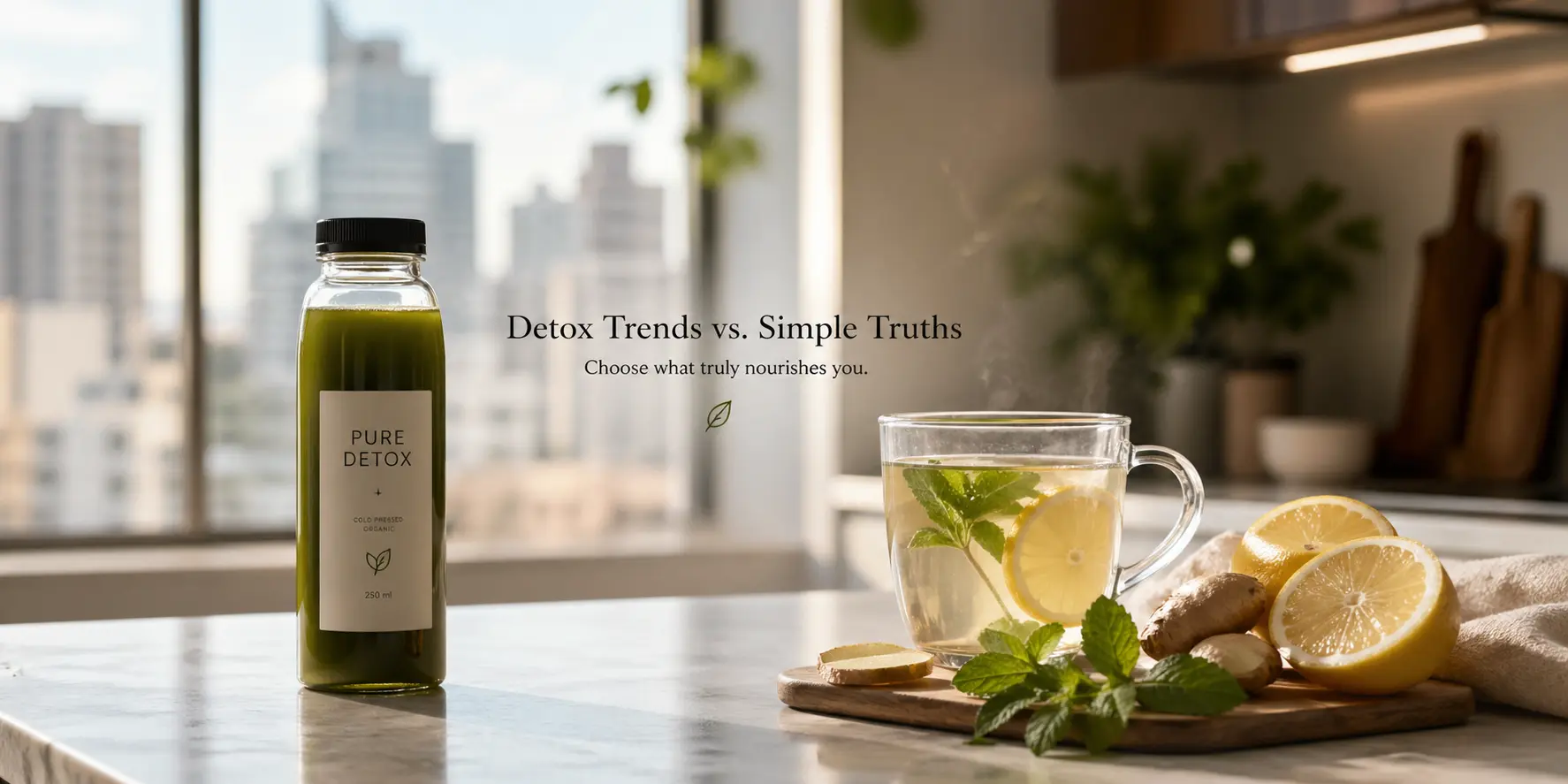
The detox market has done something rather clever: it has turned urban exhaustion into a premium beverage occasion. A late dinner, a red-eye flight, three coffees too many, a week of sitting through investor calls, and suddenly a chilled green bottle in a luxury grocery aisle begins to look less like juice and more like absolution.
That is the commercial brilliance of the category. It does not sell nutrition alone. It sells relief from the suspicion that modern professional life is quietly damaging the body and that a small, disciplined act can restore control. Few consumer propositions are more powerful.
Across Indian metros, detox has become a language of aspiration.You can easily find it on the breakfast buffet or in some fancy gyms as well. The essence is that the trend has widespread across all the glamorous as well as aspirational spaces in modern urban life. The packaging of the product is quite minimal and clean, but the marketing statement is quite bold feel it is usually expensive as it has clearly positioned itself as a premium product.In any need kitchen, you can easily find lemon, ginger, turmeric, moringa, tulsi, cucumber and mint.
People use it at home either has food or home remedies. But now such ingredients are recognized as detoxing agent which can help you to maintain cleanse your body and maintain internal balance. Suffice to say, the simple kitchen ingredients are being repackaged by the premium companies and sold to consumers by labelling at it as a premium wellness product.
Gingeris a vital ingredient for digestion, turmeric can help you for inflammation and tulsi is the magic wand which can cure cold.Because of the hype and branding, brands make you feel like you are doing something extraordinary thing, but in reality it is not very much different from what you already get at home.
The body, inconveniently for the more dramatic end of the wellness business, is not a neglected machine waiting for a cold-pressed intervention. The liver, kidneys, gut, lungs and skin are already in the business of removal, filtration and repair. They do not pause their work because one has eaten badly at a client dinner. Nor do they suddenly become more competent because a bottle carries the word “detox” in a thin sans-serif font.
Yet the consumer appeal is understandable. The average executive does not want a lecture on sleep, fibre, alcohol moderation and movement. The founder raising capital across time zones does not want to be told that recovery is slow and cumulative. The senior manager living between Gurgaon traffic, late-night decks and weekend social obligations wants a ritual that is quick, visible and morally reassuring. The detox drink enters that gap with near-perfect timing.
This is where an unglamorous household remedy deserves a more serious hearing: warm lemon water. Not because it is magical. Not because it “flushes toxins”, a phrase that has survived far longer in marketing than in evidence. Warm water with a squeeze of fresh lemon is useful because it is simple, low-cost, culturally familiar and difficult to over-commercialise. Its virtue is not drama. Its virtue is discipline.
A glass of warm lemon water in the morning can actually help your body forget the fluids and start the day by being hydrated. There are also some kinds of people who find the taste of clean water quite dull.Adding lemon gives the water a little flavour to those people, making it more acceptable. It also offers vitamin C, but not a huge amount. The tangy and sharp taste of a lemon can provide you a healthier alternative to packaged fruit juices or sweet drinks.
India and Current Wellness Market
India has always understood the household remedy differently from the Western wellness industry. In many homes, a morning drink was never positioned as a “biohack”. It was simply what one did. Ajwain water after heaviness, jeera water in summer, haldi in milk, nimbu in water, ginger in tea. These practices were not always clinically precise, and they should not be romanticised beyond reason. But they emerged from observation, repetition and economy. They were not built first as brands.
The current wellness market often reverses that order. It begins with the brand, then searches for tradition, then adds a scientific-sounding vocabulary. Ayurveda-coded design, lab-style labels, subscription models and influencer routines create the impression of depth even when the product is only a dressed-up version of an old kitchen habit. There is nothing inherently wrong with modernising tradition. Convenience has value. Hygiene has value. Consistency has value. But the premium must be earned by transparency, not by inflated promises.
Casualuse of the word “detoxication”
And Medicare dumb, detoxification it’s about removing harmful substances from the body safely. In the world of Wellness products and marketing, the word the dogs is used very loosely. It has been given a lot of meanings such as bloating, better skin, feeling emotionally lighter, improved digestion, losing weight read it therefore it has no longer stick to the removal of toxins but it is loosely used as or catch all word for any kind of positive feeling after doing something healthy.
Warm lemon water should not be dragged into that same overclaiming. It will not undo a poor diet. It will not protect the liver from excessive alcohol. It would also not melt the abdominal fat and not cure conditions such as diabetes or fatty liver. Therefore, it must be inferred that it is not the magic potion for all the serious health issues which is caused by lifestyle problems. Let’s take one condition. Suppose that a person is having acidity issues then lemon can actually worsen the burning because it is acidic in nature and may irritate the stomach lining in such people.
Still, there is a reason such practices endure. They are small enough to repeat. And repetition is where most health outcomes begin.
Business lesson
There is a broader business lesson here. The first phase of India’s modern wellness boom rewarded novelty and claim-making. The next phase may reward restraint. Consumers who once bought into every reset and cleanse are beginning to ask harder questions. What exactly does this product do? Is the benefit nutritional, behavioural or merely emotional?
It reminds us that not every consumer anxiety deserves to become a product, and not every old practice needs venture capital to become valid. Sometimes the better proposition is not newer, costlier or more photogenic. Sometimes it is a glass, warm water, half a lemon, and the humility to admit that health is built less by cleansing than by consistency.
The detox economy will not disappear. It is too profitable, too photogenic and too well aligned with the insecurities of modern urban life. But its language will have to mature. The market can continue selling reset fantasies for a while, perhaps for a long while. Trust, however, compounds differently from revenue. Once consumers begin to distinguish a useful habit from an inflated claim, the most valuable wellness brands may be the quietest ones.
And in that quieter future, the simplest remedy in the kitchen may prove more resilient than the most expensive bottle in the chiller.
Disclaimer:
This isn’t a magic fix. Your body already has its own detox system. Simple habits can help, but they don’t replace medical care. If you have any health concerns, it’s always best to check with a doctor.
FAQs: No Detox Drinks Needed – Simple Home Remedy for Body Detox
1. Do detox drinks really help cleanse the body?
No, most detox drinks don’t “cleanse” your body in a scientific sense. Your liver, kidneys, and gut already handle detoxification naturally.
2. What is a simple home remedy for natural detox?
A glass of warm lemon water in the morning is a simple, low-cost way to support hydration and healthy daily habits.
3. How does warm lemon water help the body?
It helps rehydrate the body after sleep, adds mild flavor to encourage water intake, and provides a small amount of vitamin C.
4. Can lemon water remove toxins from the body?
No, lemon water doesn’t “flush toxins.” Detoxification is handled by organs like the liver and kidneys, not specific drinks.
5. Why are detox drinks so popular in urban lifestyles?
They offer a quick, convenient ritual that gives people a sense of control and relief from unhealthy routines.
6. Are expensive detox drinks better than home remedies?
Not necessarily. Many detox drinks use common ingredients like ginger, turmeric, and lemon—things already available in most kitchens.
7. What are some natural detox ingredients found at home?
Common ingredients include lemon, ginger, turmeric, tulsi, cucumber, mint, jeera, and ajwain.
8. Can detox drinks help with weight loss or fat burning?
No drink alone can cause significant weight loss. Sustainable results come from consistent habits like diet, sleep, and exercise.
9. Are there any risks of drinking lemon water daily?
For some people, especially those with acidity or sensitive stomachs, lemon water may cause irritation or discomfort.
10. What is the real key to maintaining a healthy body?
Consistency in hydration, balanced nutrition, sleep, and physical activity matters far more than short-term detox trends.